

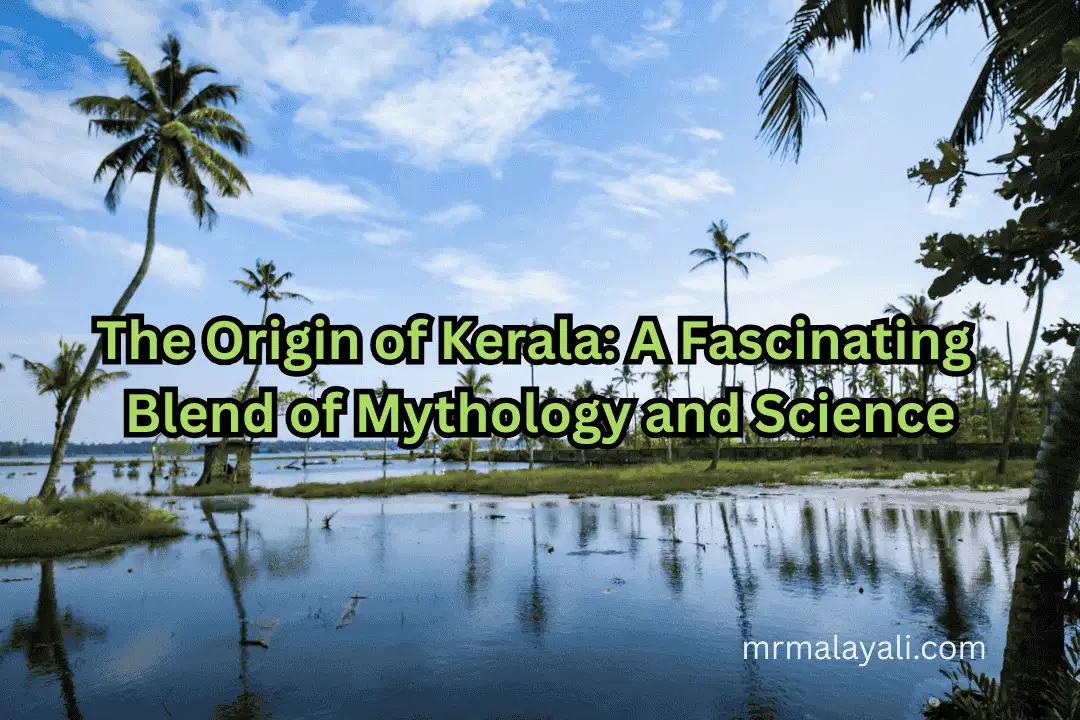
Kerala, often referred to as “God’s Own Country,” is a land of unique geography, rich culture, and a history that dates back thousands of years. Nestled between the Lakshadweep Sea and the Western Ghats, this narrow strip of land has a story of origin that is as enchanting as its landscapes. To understand how Kerala came into existence, one must look at both the legendary myths that have been passed down through generations and the scientific explanations provided by geologists. This article explores the dual narrative of Kerala’s birth.
Contents
- 1 1. The Legend of Lord Parasurama
- 2 2. Scientific and Geological Origins
- 3 3. The Role of Tectonic Activity
- 4 4. Historical References and Ancient Maps
- 5 5. The Western Ghats: The Protector of the Land
- 6 6. Cultural Identity and the Name ‘Kerala’
- 7 7. Modern Kerala and Environmental Preservation
- 8 Conclusion
1. The Legend of Lord Parasurama
The most popular story regarding the origin of Kerala is rooted in Hindu mythology. According to the legend, Lord Parasurama, the sixth avatar of Lord Vishnu, was the creator of this land. After a series of fierce battles to rid the world of corrupt kings, Parasurama sought a way to penance for his actions. He reached the Konkan coast and stood atop a mountain peak. It is said that he threw his mighty axe (parasu) into the sea. The sea receded to the point where the axe fell, and a new stretch of land emerged from the waters. This land, stretching from Gokarna to Kanyakumari, became known as Kerala. Parasurama then brought Brahmins from the north to settle in this fertile land, dividing it into 64 villages.
2. Scientific and Geological Origins
While the legend of Parasurama is culturally significant, geologists provide a different, scientific explanation for the formation of the Kerala coast. Millions of years ago, the Indian subcontinent was part of a supercontinent called Gondwana. As the tectonic plates shifted and India moved northward to collide with the Eurasian plate, the Western Ghats were formed. Scientists believe that the coastal plains of Kerala were once under the sea. Over millions of years, seismic activities and the receding of the ocean levels led to the emergence of this land. The heavy silt and sediment brought down by the numerous rivers flowing from the Western Ghats also played a crucial role in forming the fertile alluvial soil that Kerala is famous for today.
3. The Role of Tectonic Activity
Geological studies suggest that Kerala’s coastline is relatively young compared to the ancient rocks of the Western Ghats. There is evidence of a major seismic event thousands of years ago that caused a significant portion of the seabed to rise. This “marine regression” explains why marine fossils and shells are often found in areas that are now several kilometers away from the current shoreline. The formation of the backwaters (Kayals), which are a unique feature of Kerala’s geography, is also attributed to these geological shifts and the continuous interaction between the rivers and the sea.
4. Historical References and Ancient Maps
The existence of Kerala as a distinct region is noted in ancient Greek, Roman, and Arab records. Pliny the Elder and the author of the ‘Periplus of the Erythraean Sea’ mentioned the prosperous ports of Kerala, such as Muziris, as early as the 1st century AD. These records indicate that while the land emerged through geological processes, it quickly became a global hub for the spice trade. The unique positioning of Kerala made it a gateway for different cultures, religions, and traditions, long before many other parts of the world were even mapped.
5. The Western Ghats: The Protector of the Land
The Western Ghats are not just a mountain range; they are the biological backbone of Kerala. Their formation is intrinsically linked to the origin of the land. By acting as a barrier to the moisture-laden monsoon winds, the Ghats ensure that Kerala receives abundant rainfall. This rainfall feeds the 44 rivers that crisscross the state, maintaining the lush greenery that defines the region. Without the Western Ghats, the climatic conditions of Kerala would have been entirely different, possibly resembling a much drier landscape.
6. Cultural Identity and the Name ‘Kerala’
The word ‘Kerala’ is believed to have been derived from ‘Kera’ (coconut tree) and ‘Alam’ (land), meaning the “Land of Coconut Trees.” Another theory suggests it comes from the ‘Chera’ dynasty, the ancient rulers who governed the region. Regardless of the etymology, the identity of the land is deeply tied to its physical birth. The rituals, festivals like Onam, and the agricultural practices of the Malayali people are all reflections of the fertile land that emerged from the sea, whether by divine intervention or geological evolution.
7. Modern Kerala and Environmental Preservation
In 2026, as we look back at the origins of our land, the focus has shifted toward preserving this unique geography. The same forces that created Kerala—the rivers and the sea—are now facing challenges from climate change and human intervention. Understanding the delicate process of how this land was formed helps us realize the importance of protecting the Western Ghats and the coastal ecosystem. Sustainable living and environmental conservation are the keys to ensuring that “God’s Own Country” remains as beautiful as it was when it first emerged.
Conclusion
The origin of Kerala is a beautiful tapestry woven with threads of myth and science. Whether you choose to believe in the divine axe of Parasurama or the complex movements of tectonic plates, the result is a land of unparalleled beauty and significance. Kerala’s birth story serves as a reminder of the powerful forces of nature that shape our world. As we continue to inhabit and develop this narrow strip of paradise, it is our responsibility to honor its history and safeguard its future. For more insights into the history and heritage of different regions, stay connected with our latest updates.